The nap that used to work
The afternoon nap used to happen by itself. You put her down, she went, and bedtime landed near seven without much of a fight. This week she lies there talking at the ceiling for forty minutes, surfaces crying at 5:20, and by quarter to seven she is too far past it to settle at all.
The room is the same. The routine is the same. The swaddle, the sound machine, the order you do things in, all the same. The only thing that moved is her.
This is an ordinary shape for it to take. A schedule that fits a baby well is already on its way out, because the baby it was built for is being replaced, week by week, by a slightly older one. The plan did not break. It expired.
The plan did not break. It expired.
Three things move at once
Three things shift underneath a working schedule, and they run on different clocks.
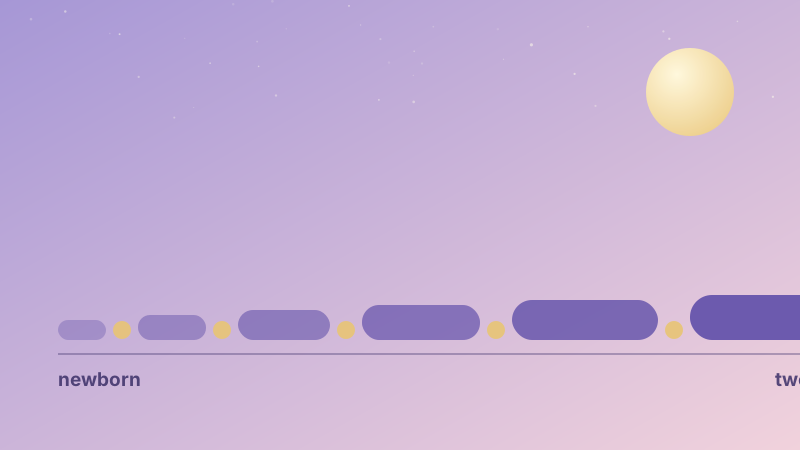
The windows get longer. A wake window is just the awake time between one sleep and the next. Typical ranges look like this:
- Under 6 weeks: 45 to 80 minutes awake, across about six naps
- 6 to 12 weeks: 60 to 100 minutes, about five naps
- 3 to 5 months: 90 to 120 minutes, about four naps
- 5 to 8 months: 115 to 160 minutes, about three naps
- 8 to 14 months: 175 to 225 minutes, two naps
- 14 months to 2 years: 280 to 350 minutes, one nap
The naps get fewer. Six or so in the newborn weeks, around four somewhere between two and three months, a steady three through the middle of the first year, two from about eight or nine months, one from somewhere between thirteen and eighteen months. Naps usually go entirely between three and five years.
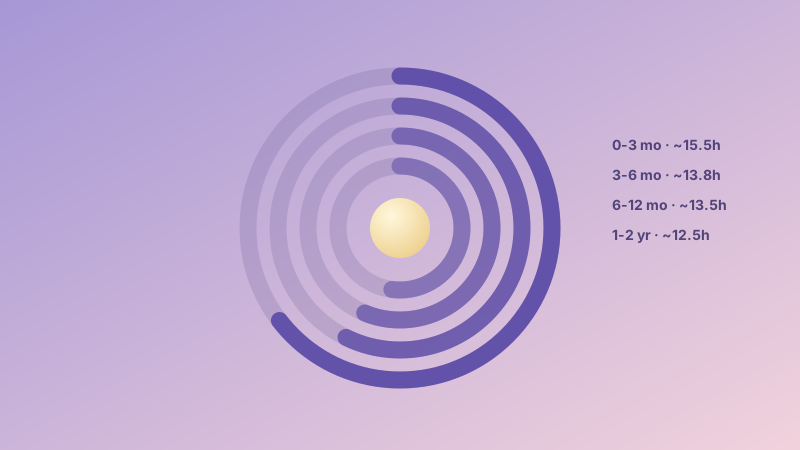
The total comes down. Published total-sleep norms run about fourteen to seventeen hours in twenty-four for the first three months, 12.5 to 15 through about six months, 12 to 15 out to the first birthday, and 11 to 14 in the second year. They describe what is typical across many babies, not what any one baby owes you.
Cradle is built on published pediatric sleep research. The exact minute ranges above are Cradle's own, drawn from published wake-window tables.
It reads as backsliding
From the inside this feels like the opposite of progress. She used to nap. Now she fights it. She used to go down at seven. Now she is awake at 5:40 and furious about it.
The arithmetic is kinder than the feeling. Sleep pressure builds with awake time. If her typical window has stretched toward 175 minutes, 120 may no longer be enough for her to settle. It may not be refusal at all. She may simply not be tired yet — and half an hour later, past it. The two look identical from the doorway and behave very differently.
Fewer naps makes it sharper still. Every nap that disappears hands its awake time to the windows on either side, so the day gets made of longer and longer pieces held together by the same bedtime. That is a developmental step. It reads as backsliding because it costs us the evening.
One flat number, all day long
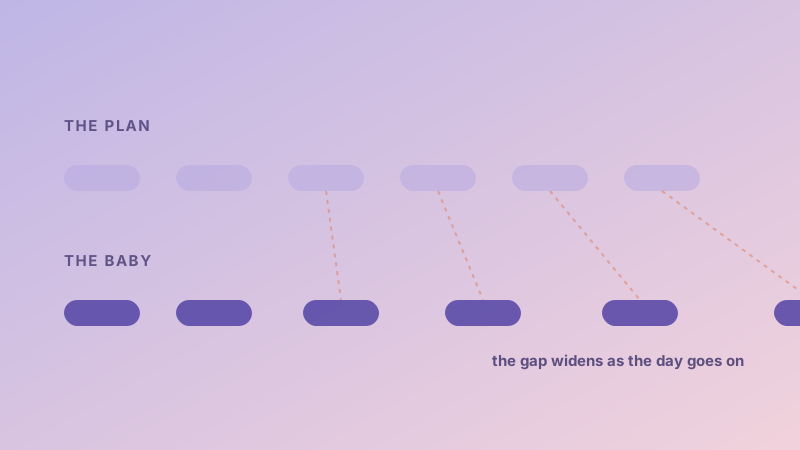
Here is the part that is easy to miss, and it is one common way a good schedule quietly goes wrong: the windows in a day are not the same length as each other.
The first window of the day, morning wake-up to first nap, is the shortest one there is. She woke up rested, so almost no pressure has built. The last window, final nap to bedtime, is the longest, because the whole day is sitting behind it.
For a ten-month-old on two naps, a day Cradle lays out runs roughly 2h30 awake, then 3h20, then 4h10 before bed. The average of those three is 3h20, which is exactly the middle of the range for that age. The total awake time has not changed at all. Only its distribution has.
At eight months on three naps the same logic gives about 1h30, 2h, 2h35, then 3h05. At fifteen months on one nap it is about 4h30, then 6h. The spread also narrows as the day loses windows: Cradle builds the ramp at roughly plus or minus 35 percent around the midpoint at four windows, 25 percent at three, 15 percent at two, because one long stretch late in a two-window day is a very different thing from one in a four-window day.
Take a single number and run it all day and both ends go wrong at once. A flat 3h20 for that ten-month-old pushes the morning nap later than a short first window would suggest, and pulls bedtime earlier than a long last window would. Both ends land off, in opposite directions, from the same number.
The order things fall apart in
Schedules do not fail all at once. They fail at the edges, in a fairly predictable order, and the order is the clue.
- The last nap goes first. It gets fought, or it gets taken and then shoves bedtime somewhere it should not be.
- The first nap turns short or gets refused. That end often points back at the morning window being too short rather than too long — worth checking against what you have actually logged, rather than assumed.
- Early waking shows up after weeks of the same bedtime working.
- The calendar itself: eight weeks, around three months, eight to nine months, thirteen to eighteen months. If a week is coming apart and the age lines up, a developmental step is one likely explanation. It is not the only one — anything that worries you about how she seems in herself is a question for her doctor first.
What many parents do is less dramatic than it feels at 3am: move one thing, not four — ten or fifteen minutes onto the first window — and leave the rest of the day alone. Then give it most of a week before deciding, because babies vary enormously and one night tells you very little. One bad night is weather. A week of the same bad night is climate.
Dropping a nap is rarely a single day either. It usually arrives as a couple of weeks of mixed days, three naps on some, two on others, and the thing that carries us through is an earlier bedtime on the days the nap did not happen.
What gets written down at 3am
About one in seven sleep logs in Cradle is written between midnight and 5am. Two thirds of sleeps are logged the moment they start. sleep logged by real families., and more than 5,600 moments in all.
Worth being precise about what that is. It is a record of what parents wrote down, not a measurement of what babies did. Nobody logs everything, and the nap that nobody logged is invisible. These are floors, not ground truth.
What a written record is good for is exactly the problem in this article. A last nap sliding by ten minutes a week is almost impossible to feel from inside a tired fortnight. Drift like that is easier to see written down than to remember. A record does not decide anything for you; it just shows what you logged.
What the ranges are not
Every number here describes what is typical, not what is required. A range is not a target and not a verdict. Plenty of babies sit outside the middle of any range, and a baby at the edge of one is not a baby with a problem.
They vary enormously, too. Two siblings in the same house on the same routine can land in different places, and both be entirely ordinary.
And none of this speaks to health. Anything that worries you about her breathing, her weight, her feeding, or just how she seems in herself belongs with her doctor, not with an app or a table.
The schedule running out is not a sign we got it wrong. It is the sign she grew, on time, while we were too tired to notice.