The 5pm that goes wrong
The morning nap went in at the first yawn. The afternoon one took forty minutes of patting, went twenty-five minutes, and ended with both of you on the floor. By five o'clock she is wired, laughing too loudly at nothing, and will not be put down.
The instinct in that moment is that she is not tired enough. The instinct is usually wrong. A baby who has been awake too long does not look sleepy. She looks the opposite, and that is the whole problem.
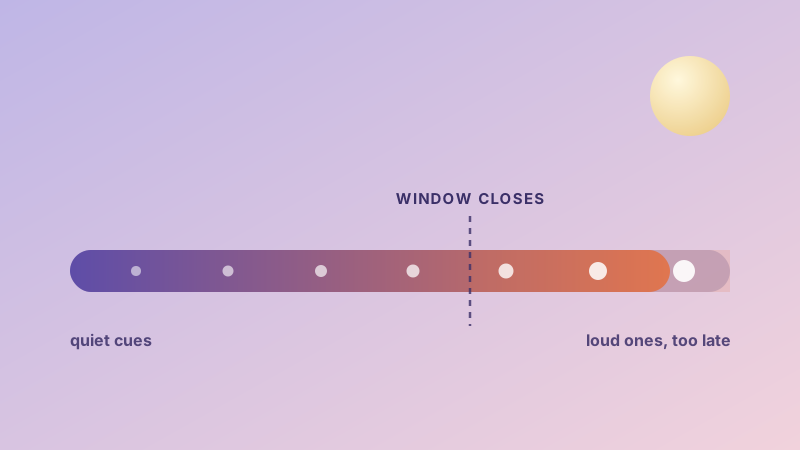
Crying is not the signal that a window is closing. It is the receipt for one that already closed.
Why overtired looks like wide awake
When a baby stays awake past the point where sleep comes easily, the body treats it as something to push through. Stress hormones rise, alertness climbs, and a baby who was ready to sleep twenty minutes ago is now too activated to settle.
That is why the last stretch before bed is the hardest one to read. A tired baby gets quieter. An overtired baby gets louder, and everything you would normally do to help stops working.
The ten signs, roughly in order
They rarely all appear, and they do not arrive on a schedule. But they tend to run in this sequence, and the useful ones are near the top.
- The stare. Eyes unfocused, fixed on nothing in particular. Usually the first thing to show, and the easiest to miss.
- Slower engagement. She was tracking your face and now she is not quite following it.
- Ears, face, hair. Pulling at an ear, dragging a hand down the cheek, batting at the head.
- The first yawn. Widely treated as the starting gun. It is closer to a halfway mark.
- Red or puffy around the eyes and brows. A colour change before a behaviour change.
- Jerky limbs. Arms and legs going stiff and fast rather than loose.
- Turning away. Breaking eye contact, turning the head from a toy or a face that was working a minute ago.
- A second wind. Suddenly bright, giggly, almost frantic. This is the one most often read as “not tired.”
- Fighting the hold. Arching, pushing off, refusing the position that usually settles her.
- Crying that will not be soothed. The end of the sequence, not the beginning.
The signs are late; the clock is early
Here is the part that changes how you use the list. Cues are a lagging indicator. By the time a baby shows you three of them, the comfortable window has usually closed, and you are now settling a harder baby than you had ten minutes ago.
Which is why a rough time is more useful than a perfect read of a face. Not to override what you see, but to tell you when to start looking — and when to begin the wind-down whether or not you have seen anything yet.
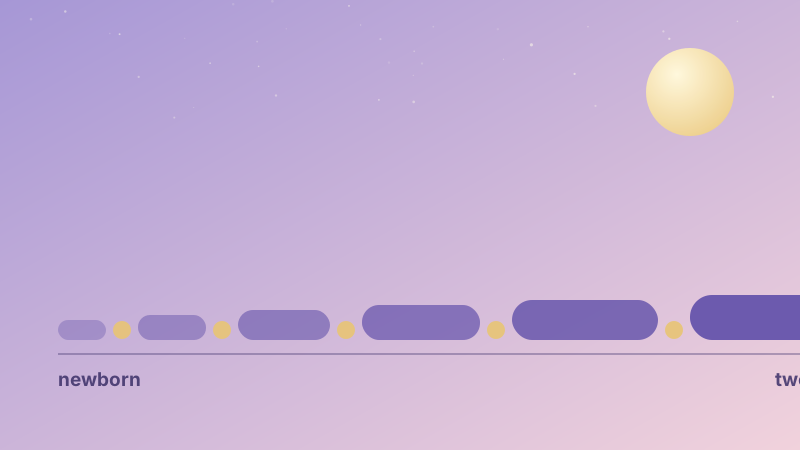
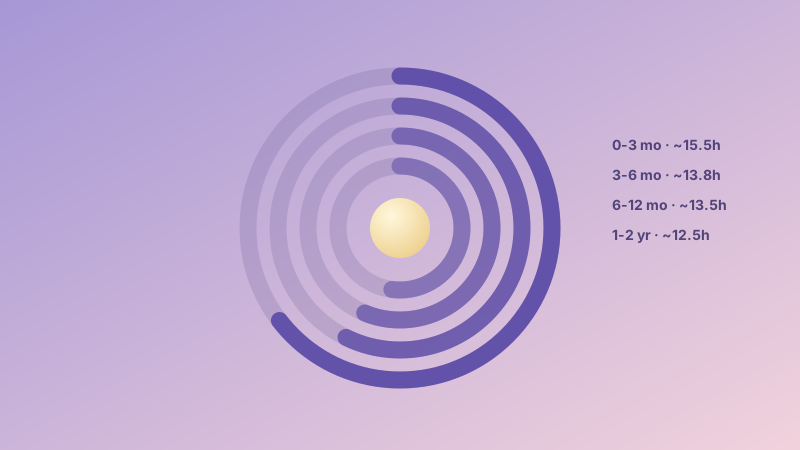
Median awake time between sleeps, from sleep logged by families in Cradle. These describe what parents recorded, not what anyone measured — and parents were looking at a suggested window when they logged them, so read this as a picture of what families do, not as proof the ladder is right.
Settling time lives inside the window
A window ends when a baby is asleep, not when you start trying. If yours usually takes fifteen minutes to go down, a ninety-minute window means the room goes dark at seventy-five.
This single misreading accounts for a lot of hard afternoons. The window was right. The start time was fifteen minutes late, every time, and it compounds across a day.
When it is not overtiredness at all
Not every hard settle is a window problem, and treating every one as though it is will send you in circles.
- Undertired looks similar from the outside. A baby who has not been awake long enough will also resist, but tends to be cheerful about it rather than frantic.
- Hunger, wind, a dirty nappy and being too warm all produce fussing that no schedule will fix.
- A developmental leap can wreck a week of naps with nothing wrong at all.
- Teething and illness break the pattern entirely, and the pattern comes back after.
And some babies are simply harder to settle than others at the same age, with nothing behind it that needs solving.
What actually helps
Once a baby is past the window, the job changes from timing to recovery.
- Drop the stimulation hard. Dark, quiet, boring. Less input, not more.
- Accept the short nap. A thirty-minute recovery nap is not a failure; it takes the edge off the next window.
- Bring bedtime forward. After a badly overtired day, earlier usually goes in easier than later, which is the opposite of what it feels like.
- Start the next window from when she woke, not from when the nap “should” have ended.
And if a day is already lost, let it be lost. One rough day does not set anything; a pattern across a fortnight is worth paying attention to.
The thing worth remembering
The ten signs are useful, but they are a backstop. Watching a baby closely enough to catch the stare every single time is not something anyone can sustain across a whole day, on no sleep, with other things happening.
Knowing roughly when the window closes lets you start the wind-down before you need the cues at all — which is the difference between reading a baby and chasing one.
Every range here describes what is typical across a great many different babies. None of it is a target, and none of it is a verdict on yours.