The week the good sleeper stops sleeping
She was doing five-hour stretches. Now she is up every ninety minutes, the naps have collapsed to thirty, and she wakes the instant you lower her. Nothing about the room, the routine or the day has changed.
Everyone has warned you about the four-month sleep regression. Almost none of them described what it actually is, and the description matters, because it changes what you do about it.
Nothing went backwards. Your baby's sleep grew up, and it is not going to change back.
1. It is not a regression
A regression means going backwards. This is the opposite: a permanent, one-way change in how sleep is built.
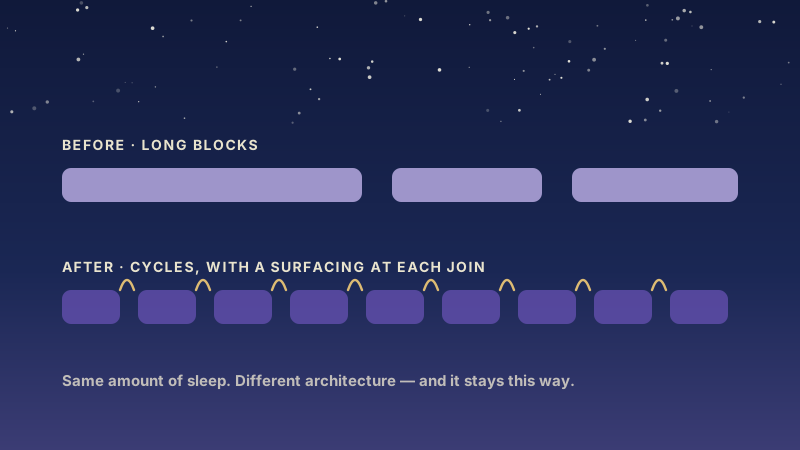
Newborn sleep has two broad states and drops quickly into deep sleep. Somewhere around this age it reorganises into the cycling structure adult sleep uses, with lighter stages and full surfacings at the end of every cycle.
Nothing was lost. The architecture changed, and it stays changed.
2. It is why she wakes the second you put her down
A newborn goes into deep sleep within minutes, which is what made the transfer possible. After the change, the first stretch of a sleep cycle is light.
So the same move that worked for four months — rocking to sleep, then lowering — now puts her down during a stage she can surface from. The technique did not stop working. The thing it was working on changed.
3. It is not really at four months
It commonly shows up anywhere from about three to five months. Some babies barely register it. Some go through it early, some late, and a few parents never identify a distinct period at all.
It also does not track your baby's birthday. If she arrived early, it tends to follow the adjusted age rather than the calendar one.
4. It hits the easy sleepers hardest
This is the cruel part, and the most common thing left out. A baby who has always been hard to settle has, in a sense, less distance to fall.
The five-hour-stretch baby is the one whose parents get the shock, because the change removes the thing that was working. If you are reading this feeling like you broke something, the reverse is closer to the truth — you had a good sleeper, and good sleepers have further to come down.
5. The naps go first, and go worst
Night sleep is propped up by strong biological signals. Daytime sleep has far less holding it together, so it is the first thing to fracture.
The thirty-minute nap is the signature of this period: one cycle, a full surfacing at the end, and no ability yet to join the next one. It is not a sign the nap was wrong. It is one complete cycle, which is what the new architecture produces.
6. The windows widen in the middle of it
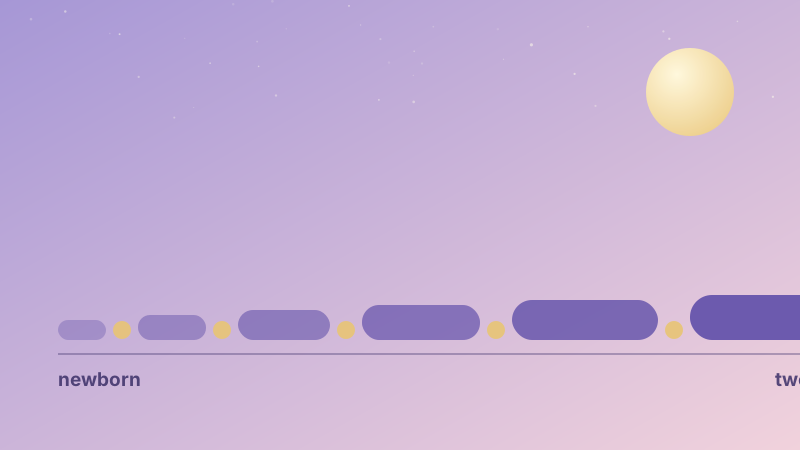
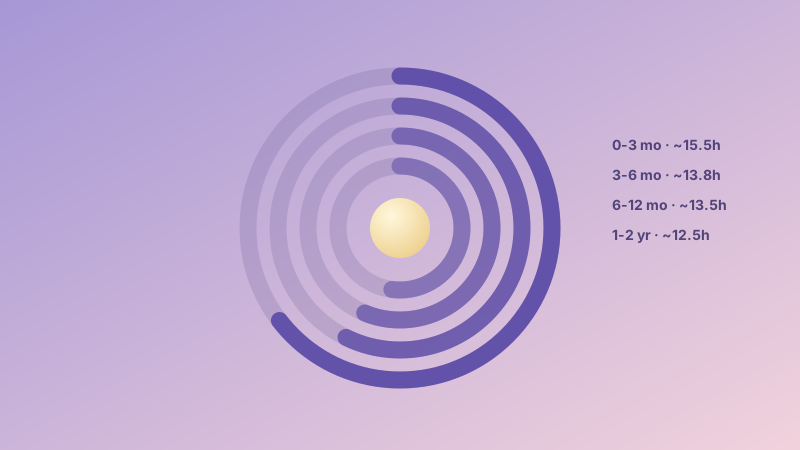
Two things happen at once, and they are easy to confuse. The sleep structure changes, and the amount a baby can comfortably stay awake goes up.
So a schedule that fitted perfectly in month three is now both disrupted and genuinely outgrown. Parents often fix the first and miss the second, then conclude nothing works.
Median awake time between sleeps, from sleep logged by families in Cradle. Parent-entered records rather than measurements, and parents were viewing a suggested window when they logged — so this shows what families recorded, not proof of a correct schedule.
7. Hunger is usually real, not a habit
Night feeds often increase through this period, and the reflex is to suspect comfort rather than hunger. Around this age growth is fast, daytime feeds get more distractible as babies become interested in the room, and some of the intake genuinely moves to the night.
A baby waking and feeding properly is a different situation from a baby waking and taking two sucks. Both are common, and only one of them is about food.
8. There is no date it ends
Most families describe a rough two to six weeks of the worst of it. But it does not resolve in the sense of going back — the new structure is permanent, and what improves is a baby's ability to work within it.
Which means the goal is not to get through to the other side and recover the old sleep. The old sleep is gone. What arrives instead is different, and eventually better.
9. Most of what you can do is unglamorous
There is no technique that reverses a neurological change, and anything sold as one is selling something.
- Move the windows up. A good part of what looks like regression is a schedule that no longer fits.
- Protect the first nap. It is usually the most robust one and it sets up the rest of the day.
- Bring bedtime earlier while naps are broken. Counterintuitive, and it usually helps.
- Give any change two weeks before deciding it failed. In the middle of this, three days tells you nothing.
- Drop the bar on the day. Contact naps and a pram count as sleep.
When it is worth a call
Disrupted sleep around this age is ordinary. Some things are not, and are worth a doctor rather than a schedule: a baby not gaining weight, feeding much less overall rather than shifting it around, breathing that worries you, unusual lethargy, or a baby who seems genuinely unwell rather than unsettled.
And if you are the one who is not coping — which this period causes more than it gets credit for — that is also worth saying out loud to someone. Every range here describes what is typical across a lot of very different babies. None of it is a target, and none of it is a verdict on yours.