A good consultant gives you a real plan, stages and all. Then they go home, and you're the one who has to execute it at 5:40am on four hours' sleep — remembering which stage you're on, and spotting the day your baby is ready for the next one. That's the part Cradle does. It reads your baby's own logged sleep, tells you today's windows, and moves you up the moment the pattern says it's time.
A real Cradle dashboard runs further down this page — no download, no sign-up.
Below is a four-month-old's schedule. The two dates beside it are the days their nap count actually changes — step through them. Cradle makes that move on the day, without being asked, and tells you it did.
Wake-up held at 6:40 so only the plan moves. Times are generated by the same wake-window engine the app schedules from; naps assumed roughly an hour.
Ask any parent who's paid for one. The plan made sense in the call. What's hard is three weeks later, at dawn, when you can't remember whether you're supposed to be on four naps or three — and nobody is watching to tell you.
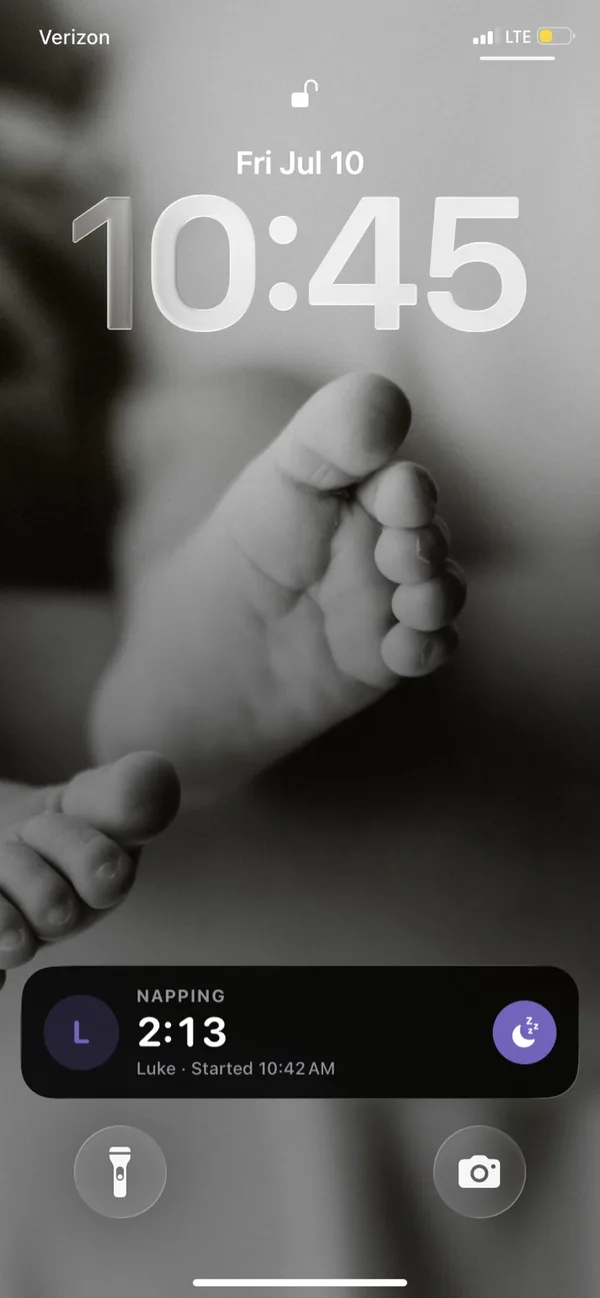
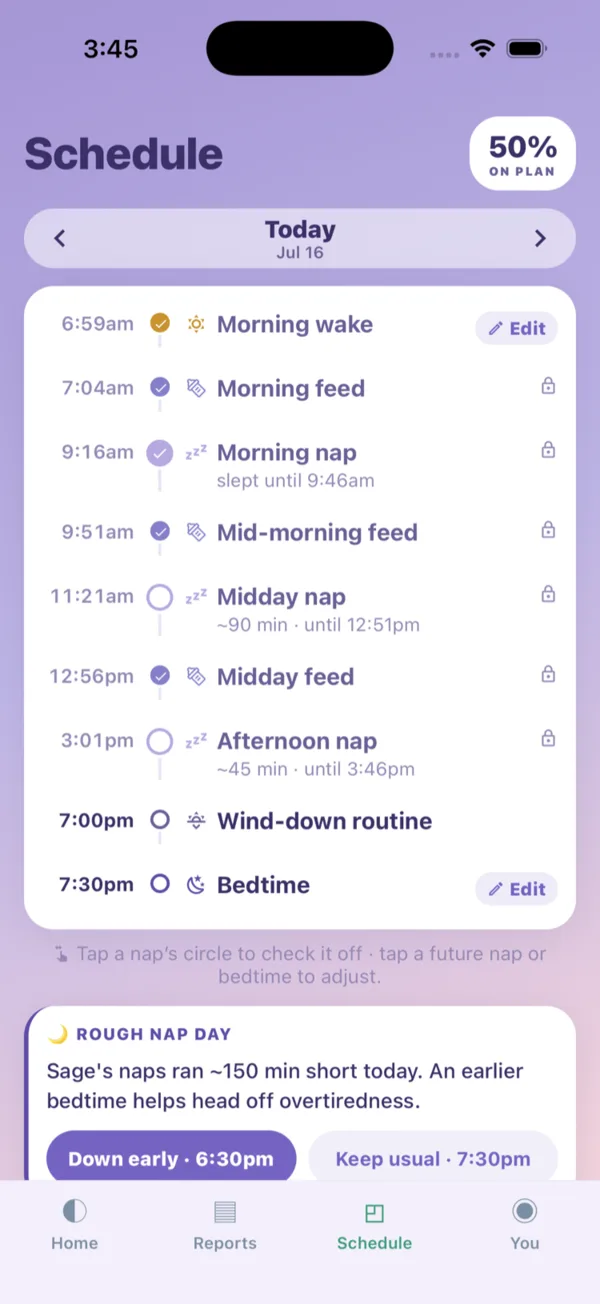
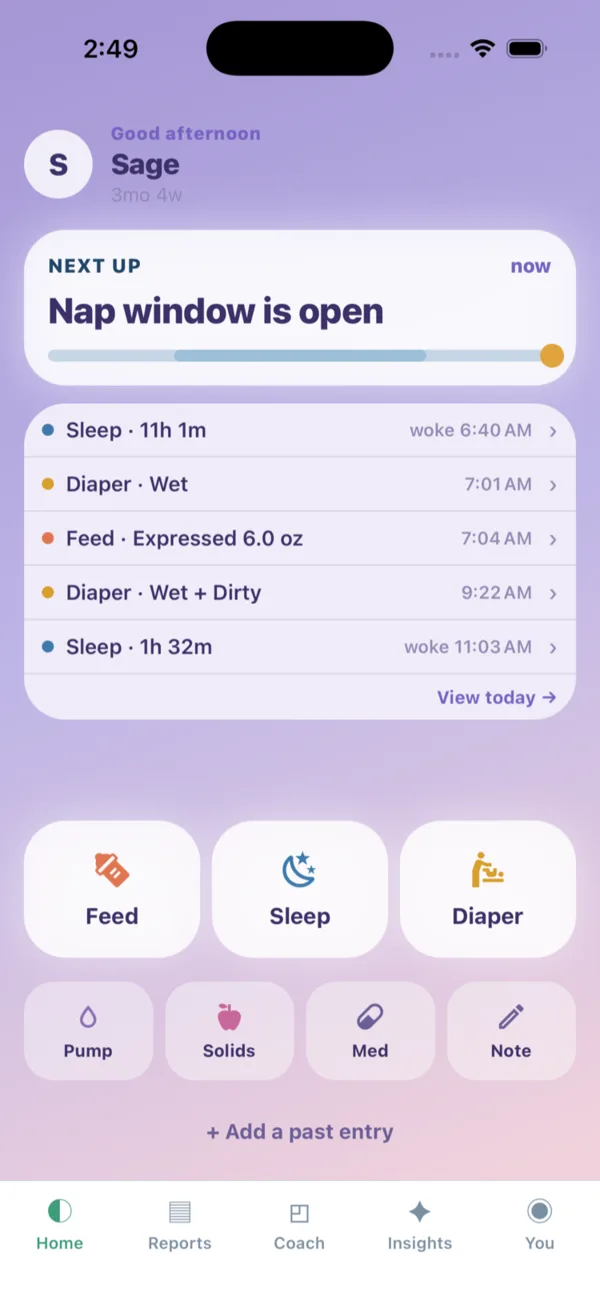
Not a PDF you re-read. Today's wake windows and the next sweet spot, on the home screen and on your lock screen, one hand, in the dark.
The stage moves when your baby's own logged sleep says it's time — not when a calendar reminder fires, and not three weeks after you first suspected it.
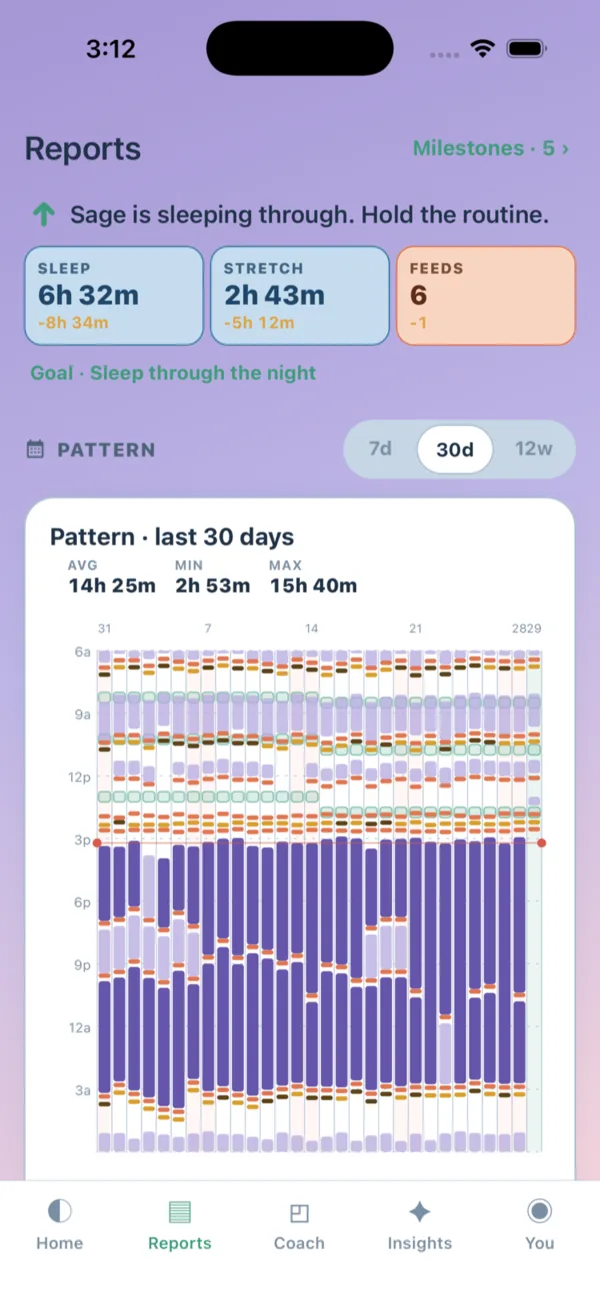
You don't have to hold any of it in your head. Every sleep is logged, every stage is tracked, and it's all still there when you're too tired to think.
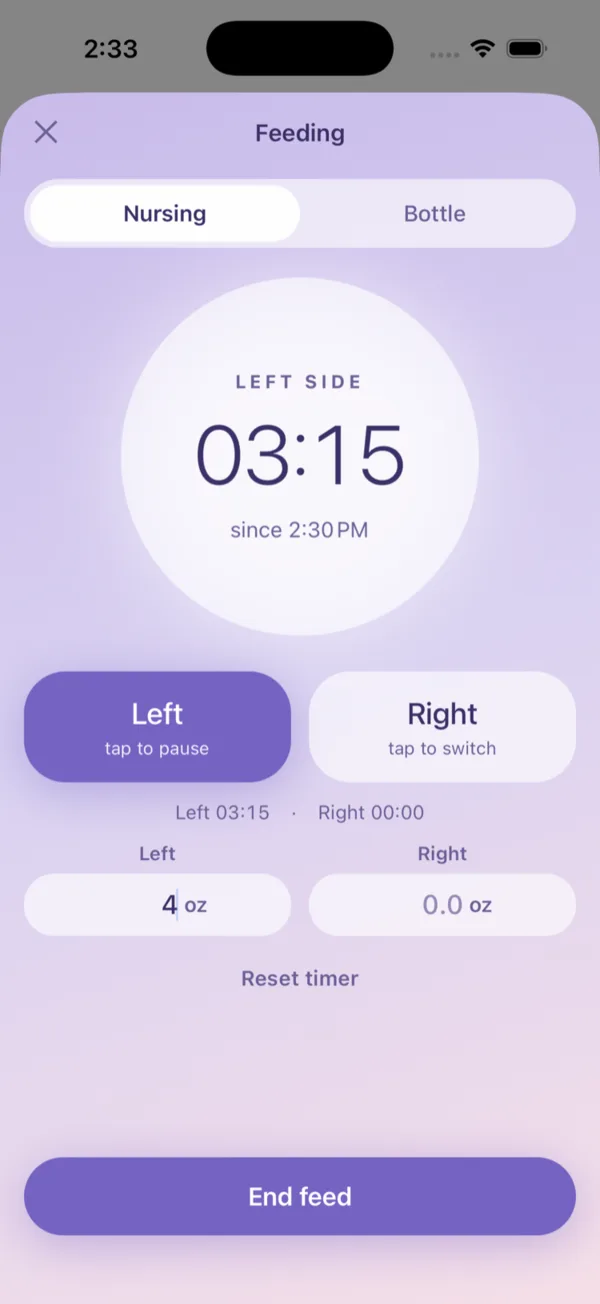
This is the hour a consultant genuinely can't help you in — and the hour you're least able to do arithmetic. So the running feed and the next window sit on the lock screen, and logging is one thumb, no unlock, no typing, screen still dark.
Any decent plan lists these. The question is whether anyone notices the morning your baby is genuinely ready for the next one — or whether you spend a fortnight fighting a schedule they outgrew.
Between three months and six and a half, the typical window stretches from about 1h 45m to 2h 18m — 33 minutes longer, on a day that's lost a nap. Cradle makes that move for you, on the evidence of your own baby's sleep, and tells you it did.
This isn't a knock on consultants — a good one is genuinely worth the money for what they do. It's just that what they do ends, and what Cradle does doesn't.
There's a full Cradle dashboard running on this site right now, on a simulated baby. Every card is computed live by the same engine the app uses. No download, no sign-up, no email — just click it.
Runs on a simulated baby. Nothing to install, nothing to sign up for.


For context, published industry cost guides put most sleep-consultant packages between $250 and $500 as of 2026, with a single initial consultation at $100–$250. Pricing varies widely by consultant, credential and format — check with anyone you're considering.
We'd rather say this than sell around it. Hire a person if:
Cradle is a tracker and a scheduling tool. It is not a medical device, it does not diagnose anything, and it does not replace professional judgement. What it does is the part a person can't be there for: every day, for two years.
The wake-window ladder, nap counts by age and overtiredness cues are adapted from published pediatric sleep research, then checked against what families actually log in Cradle. The bands on this page are the same ones the app schedules from — we didn't make them up for the landing page. Every reference is on Sources & method.
We make no claim that Cradle causes babies to sleep longer, and nothing here is a clinical result. How any individual baby responds varies.
Execution. Their plan tells you what four months looks like and what six looks like; Cradle tells you what today looks like, shifted by when your baby actually woke up, and flags the morning the pattern says you're ready to move on. The plan is the map. This is the part that keeps you on it.
From your baby's own logs. Cradle tracks when they're actually falling asleep against the window it predicted, and when that gap says the current stage no longer fits, it moves the schedule and tells you it did. The age bands it moves between come from a published pediatric protocol, not from guesswork.
No. Cradle doesn't prescribe a settling method at all. It tells you when the sleep window is open — how you get them down inside it is entirely yours.
For the diagnostic, human parts — no, and we've said so above. For the daily running of a schedule over two years, an app is genuinely better suited: it doesn't forget, it doesn't sleep, and it doesn't charge you for a follow-up.
It's $9.99 a month or $59.99 a year, billed through the App Store or Google Play. Cancel any time in your device's subscription settings — including during the trial.
Seven days free. If it isn't earning its place by then, cancel from your phone and you've spent nothing.